2026 Western Mining Summit Recap: The State of Western Mining
The 2026 Western Mining Summit Reflects a Transformative Moment for the Mining Industry
The 2026 Western Mining Summit celebrated CMA's 150th anniversary as the oldest mining association in the country and coincided with one of the greatest periods of change and growth for the mining industry in recent history.
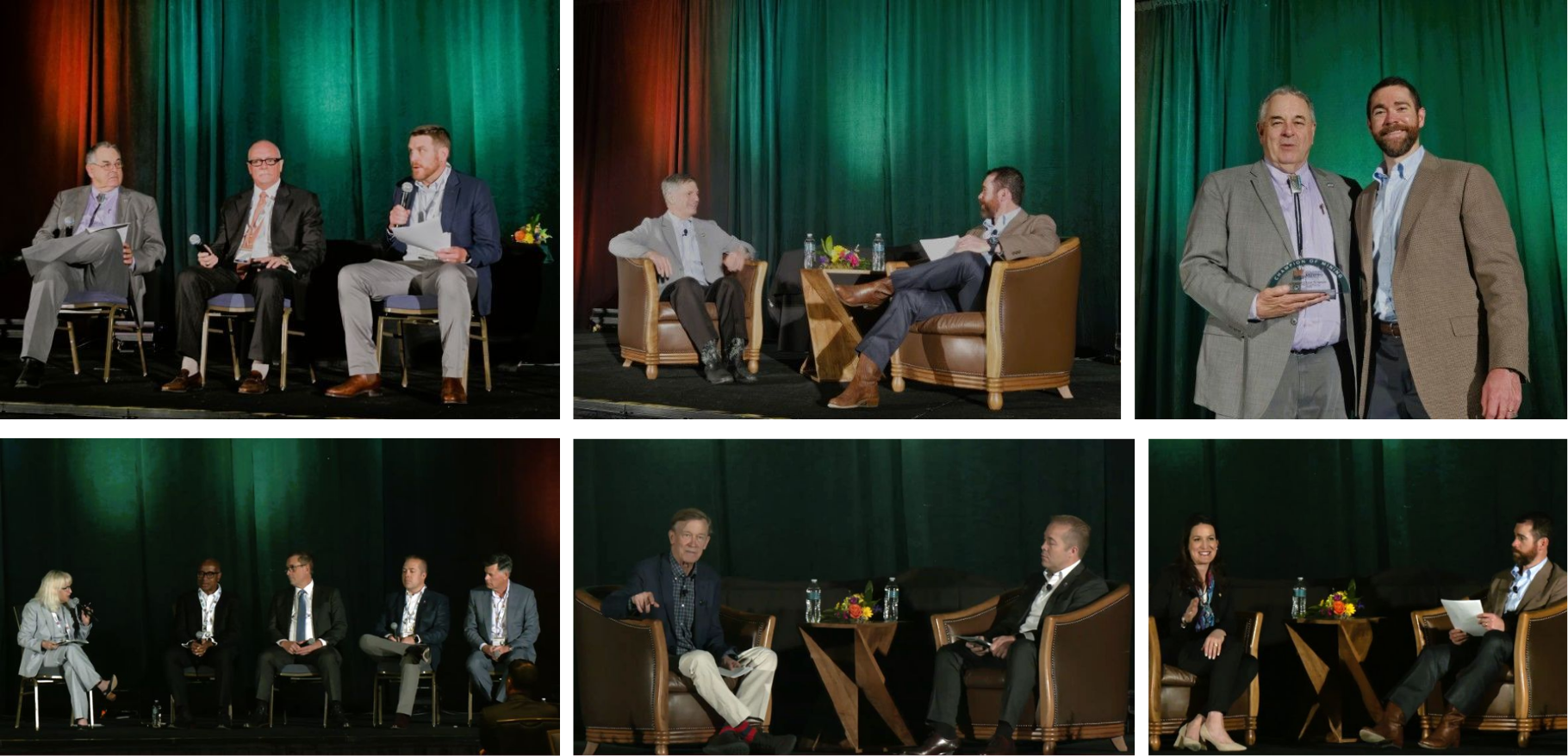
Building on a conference tradition spanning more than a century, the Western Mining Summit convened leaders from across the minerals value chain to discuss the opportunities and challenges shaping mining in Colorado and throughout the American West.
The Summit brought together mining executives, government officials, Tribal leaders, and a wide range of professionals working throughout the industry to exchange ideas and explore the issues that will define our industry’s future. Throughout conversations that ranged from permitting and artificial intelligence to water resources, mineral processing, geopolitics, mining innovation, and advanced manufacturing, a consistent message emerged—Western mining is entering one of the most consequential periods in decades.
This theme was driven by the convergence of several factors placing minerals and metals at the forefront of broader economic and public policy conversations. Demand for minerals continues to grow as advanced manufacturing, data centers, electrification, aerospace, defense technologies, and modern infrastructure reshape the global economy. At the same time, policymakers increasingly recognize that secure domestic mineral production is essential to national security, economic competitiveness, and resilient supply chains.
These are not temporary market conditions. They represent a structural shift in how the United States thinks about mining.
Colorado at the Center of the Domestic Minerals Conversation
The Summit's discussions surrounding domestic mineral supply chains illustrated this point well. Conversations explored the connection between mining and Colorado's nationally recognized aerospace sector, where satellites, launch vehicles, advanced materials, electronics, precision manufacturing, and defense applications all depend upon reliable and responsibly developed supplies of minerals. It served as one example of a broader reality: mining is not a standalone industry. It is the front end of the supply chain for many of Colorado's most innovative sectors and for the technologies that increasingly define our economy and national security.
Colorado has long been a crossroads for these conversations. Our state is home not only to world-class mining companies, but also to engineering firms, equipment manufacturers, technology developers, financial institutions, legal expertise, and one of the world's premier mining universities, Colorado School of Mines. In partnership with the Foundation for Natural Resources and Energy Law, the Summit brought many of the legal, policy, and academic professionals helping shape the future of responsible mineral development into the conversation. Together, these institutions create an ecosystem where ideas move quickly from research to policy to practice.
Advancing Permitting Through Collaboration
Permitting reform naturally remained one of the Summit's central topics. While lengthy and unpredictable permitting timelines continue to delay projects across the country, the conversations were notably forward-looking. Rather than simply identifying obstacles, participants from the National Mining Association, the Federal Permitting Council, Tribal organizations and industry leaders explored practical improvements, including greater interagency coordination, modernization of regulatory systems, improved data management, and the emerging role artificial intelligence may play in streamlining administrative processes while preserving rigorous environmental review. Equally important were the discussions surrounding the role of Tribal Nations in meeting critical minerals demands. As domestic mineral development expands, successful projects increasingly depend upon building relationships grounded in respect, transparency, and communication as well as the added value to all parties by involving Tribal Nations as equity partners in critical minerals projects. Responsible resource development, community engagement, and environmental stewardship were consistently discussed as complementary objectives that can—and must—advance together.
Energy Security and Critical Minerals
The Summit covered the rapidly changing energy landscape where, in Colorado, increased energy demands driven by population shifts, AI data centers, and other consumptive factors are magnified by the accelerated retirement of fossil fuel supplies. These pressures make the need for reliable minerals supplies even more acute and highlight the unique position of Colorado to solve its own energy supply challenges by sourcing minerals responsibly at home, rather than relying on insecure supply chains too often sourced from adversarial nations and in working conditions without adequate safety protocols or environmental standards. The energy panel specifically covered how Colorado’s word class uranium reserves can contribute to its clean energy future through nuclear technologies driven by advancements at the Colorado School of Mines. The panel also discussed opportunities to bring new geothermal energy online in Colorado and throughout the West, and the central role that molybdenum, sourced in large part from Colorado’s industry leading operations at Climax and Henderson mines, plays in providing the raw materials for geothermal infrastructure.
And while Colorado stands at the forefront of clean energy technology and development capability with respect to natural resources, industry presence, and research support, the Summit also covered headwinds to realizing Colorado’s potential in these areas. Among them, panelists discussed the need to align local regulatory frameworks with state and federal laws already in place to ensure that Colorado remains an attractive jurisdiction for clean energy and critical minerals investment, and so that we do not shortchange the progress made in these areas with overlapping or conflicting legal frameworks that discourage critical minerals and clean energy projects from advancing.
Investing in Colorado's Mining Future
Despite challenges in the permitting space, overall optimism for domestic minerals production remained high, as evidenced by sustained high commodity prices and increasing interest among minerals investors in Western U.S. projects. The Summit included discussions with senior leadership from SSR Mining, Freeport McMoRan, Climax Molybdenum, and Energy Fuels, which underscored positive trends for gold, copper, molybdenum, and rare earth elements. At the same time, panelists from Denver Gold Group and minerals investment firms underscored shifting factors driving investment decisions which could impact domestic projects.
Innovation Is Reshaping Modern Mining
Innovation was another defining theme. Senior leadership from Freeport McMoran, Caterpillar, SLB, and Deloitte discussed how artificial intelligence, automation, advanced geological modeling, remote sensing, and increasingly sophisticated data analytics are changing nearly every stage of the mining lifecycle. These technologies are improving worker safety, increasing productivity, strengthening environmental performance, and enabling companies to make more informed decisions from exploration through reclamation. The industry has always evolved alongside technological progress, but the pace of innovation today is unlike anything we have seen in decades.
Water Remains a Defining Western Issue
Water remains one of the defining challenges of the American West, and the Summit addressed that issue with both realism and innovation. Water law experts from Clark Hill and Taft discussed increasing competition for limited water resources, evolving regulatory expectations, collaborative watershed management, and new approaches to water management. These conversations reflected an understanding that mining, agriculture, municipalities, recreation, and environmental interests all depend upon thoughtful management of one of the West's most valuable resources.
Leadership Driving the Future of Domestic Mining
Finally, the 2026 Western Mining Summit demonstrated the unifying consensus for domestic minerals supply chains and the positive work being done by senior leaders in government to meet those demands. Senator Hickenlooper discussed the continued role of Colorado as a global hub for minerals innovation and research, which he continues to support through his work in the U.S. Senate, while Wyoming Governor Mark Gordon discussed his state’s continued role as a national leader in energy resource production, emerging opportunities for critical minerals and rare earths production and processing, and the positive steps Wyoming has taken to attract new minerals investment. These conversations underscored the collaborative approach needed among Western states to meet the increasing mineral needs of the Nation.
The Summit concluded with a keynote discussion with U.S. Assistant Secretary Audrey Robertson covering the rapid advancements the Office of Critical Minerals and Energy Innovation is making to stabilize critical minerals supply chains, advance new technologies, improve minerals recycling and restore U.S. minerals and energy independence in close partnership with industry and research institutions, many of which are based in Colorado.
Looking Ahead
For a century and a half, this Association has witnessed mining evolve through technological revolutions, changing commodity markets, higher environmental standards, stronger safety practices, and dramatic shifts in public policy. Every generation has faced its own unique challenges and each has adapted. Today's industry is continuing that tradition through innovation, collaboration, and an unwavering commitment to responsible resource development.
Thank you to every speaker, sponsor, exhibitor, volunteer, and attendee who contributed to this year's Summit. Your willingness to share ideas, challenge one another, and work together made this gathering a fitting celebration of both CMA's 150-year history and the future of our industry.
If the discussions at this year's Summit are any indication, Western mining is entering a period defined not simply by growing demand for minerals, but by growing confidence in our industry's ability to meet that demand responsibly.
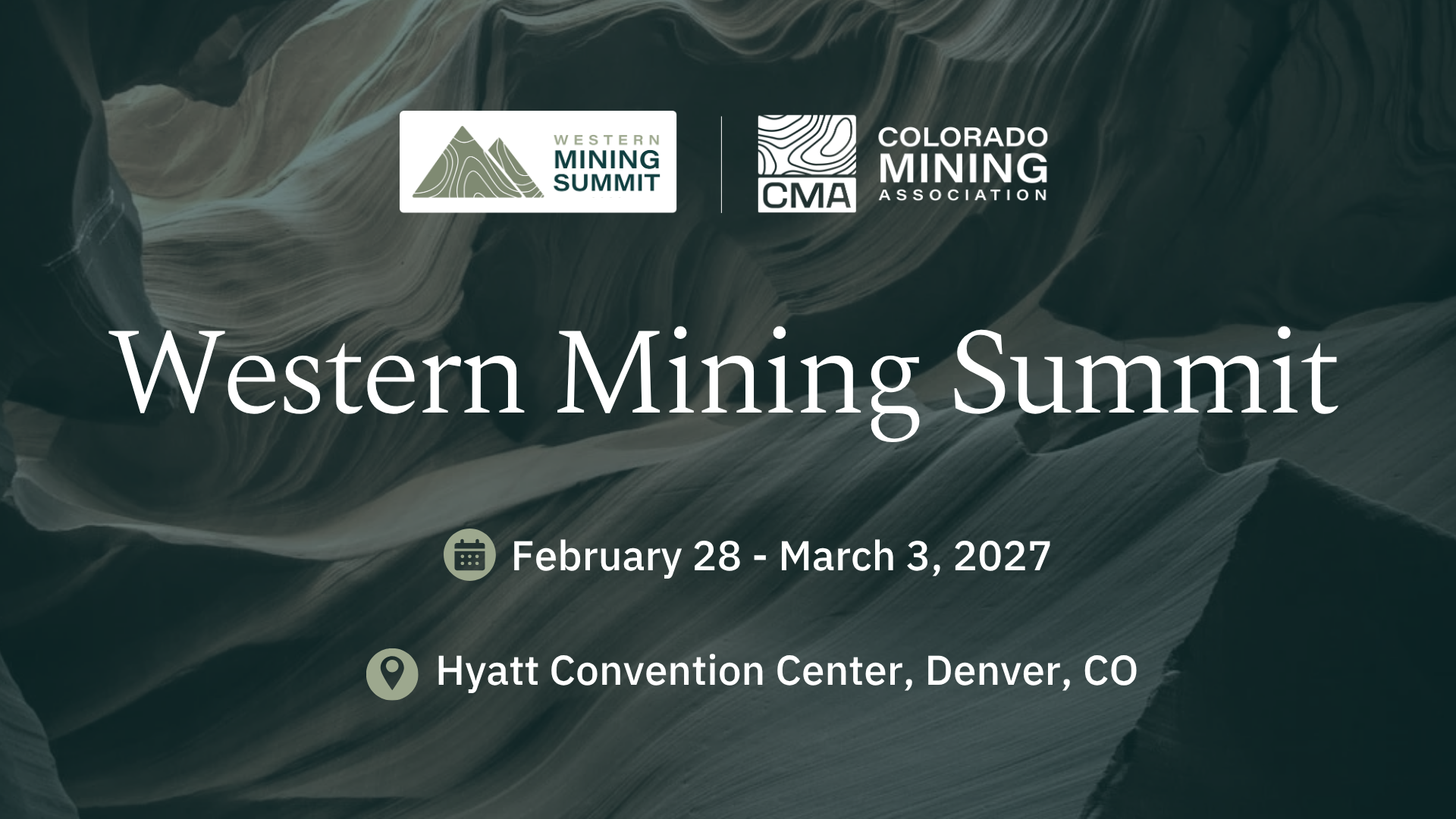
Western Mining Summit 2027
I look forward to continuing this conversation—and measuring our progress together—when we gather again next year in Denver from February 28 to March 3 at the Hyatt Convention Center, collocated with the Minexchange hosted by the Society for Mining Metallurgy and Exploration.